
What Is an Adam Walsh Act Psychological Evaluation? A Guide for Immigration Cases
An Adam Walsh Act psychological evaluation is a forensic assessment used in family based immigration cases where the US citizen or lawful permanent resident petitioner has a past conviction for a specified offense against a minor.
The evaluation exists to help United States Citizenship and Immigration Services (USCIS) determine whether the petitioner currently poses a risk to the beneficiary, meaning the spouse, child, or other family member being sponsored.
Without a qualifying evaluation, USCIS is generally required to deny the petition outright, which is why this evaluation carries significant weight in these specific cases.
What Is the Adam Walsh Act?
The Adam Walsh Child Protection and Safety Act of 2006 is a federal law originally passed to protect children from sexual exploitation and violent crime. Within immigration law, the Act bars a US citizen or lawful permanent resident who has been convicted of a specified offense against a minor from petitioning for a spouse, fiance, or other family member, unless the petitioner can prove to the Department of Homeland Security that they pose no risk to the beneficiary.
USCIS holds broad discretion in making this determination, and courts generally have limited ability to review the underlying risk finding, though the legal standard USCIS applies can sometimes be challenged.
This bar applies regardless of how long ago the conviction occurred or whether the petitioner has since completed probation, registry requirements, or treatment, which is part of why a current, independent immigration psychological evaluation carries so much weight in these cases.
What Does the Evaluation Need to Show?
An Adam Walsh Act evaluation generally needs to address two connected questions. The first is current risk, meaning whether the petitioner poses any danger to the beneficiary’s safety today, not at the time of the original offense. The second is rehabilitation, meaning documented evidence of mental health stability, treatment compliance, and lifestyle changes since the conviction.
USCIS may also weigh certified court and police records, probation or parole compliance, sex offender registry compliance, and completion of any required treatment programs alongside the psychological evaluation itself, so the evaluation is typically one part of a larger evidence package your attorney assembles.
A well written evaluation does not exaggerate or advocate. Instead, it explains the petitioner’s current functioning, treatment history, and stability in clear, professional language, which tends to read as more credible to USCIS than a report that overstates its conclusions.
What Happens During the Evaluation
A thorough Adam Walsh Act evaluation typically includes a detailed clinical interview covering background, mental health history, current functioning, and treatment participation, along with a review of records the petitioner or attorney provides, such as court documents, treatment summaries, or supervision paperwork.
Many evaluators also use a formal, standardized risk assessment instrument rather than relying on clinical impression alone, since USCIS expects an evidence based opinion rather than a personal statement or character reference. Depending on the case, the evaluator may also conduct collateral interviews with people who can speak to the petitioner’s rehabilitation and current stability.
The resulting report explains the petitioner’s current functioning and treatment history in plain, professional language rather than arguing the legal merits of the case, since interpreting the law is the attorney’s role, not the evaluator’s.
Who Conducts an Adam Walsh Act Evaluation
This type of evaluation is a specialized forensic assessment, and it is typically conducted by a forensic psychologist with specific training and experience in sex offender risk assessment, not by a general counselor or therapist. Because the report needs to withstand USCIS scrutiny and directly speaks to risk of harm to a minor or family member, the evaluator’s forensic credentials and experience with this exact evaluation type matter more here than in most other immigration evaluation categories.
If your attorney recommends this evaluation, ask directly about the evaluator’s forensic training and prior experience with Adam Walsh Act cases specifically, since not every licensed mental health provider is qualified or equipped to conduct one.
How This Differs From Other Immigration Evaluations
Most immigration psychological evaluations, such as those for extreme hardship waivers, asylum, VAWA, or U and T visas, focus on documenting trauma, hardship, or the emotional impact of a past event on the applicant or a family member. An Adam Walsh Act evaluation is different in both purpose and structure. Rather than documenting hardship the petitioner or family has experienced, it assesses risk the petitioner may pose to someone else, using structured, forensic risk assessment methods.
This distinction is why the two evaluation types require different evaluator qualifications and cannot be used interchangeably. If you already have a therapist for unrelated support, that relationship does not substitute for a forensic evaluation, since USCIS is looking for an independent, objective risk assessment rather than a treatment summary from an ongoing counseling relationship.
Talk to Your Attorney First
Whether an Adam Walsh Act evaluation is required, and what specific questions it needs to address, depends on the details of your case. Your immigration attorney is the right person to determine whether this evaluation applies to your situation and to communicate directly with the evaluator about what the report needs to cover.
This guide is general information, not legal or clinical advice, and it does not replace a conversation with a qualified immigration attorney about your specific case. If you are working through a different type of immigration evaluation, such as a hardship waiver, asylum, VAWA, or U or T visa evaluation, learn more about how those evaluations work on our Immigration Psychological Evaluation page.
Frequently Asked Questions
What is an Adam Walsh Act psychological evaluation?
It is a forensic psychological evaluation used in family based immigration cases where the petitioner has a past conviction for a specified offense against a minor, assessing current risk to the beneficiary and evidence of rehabilitation.
Who needs an Adam Walsh Act evaluation?
US citizens or lawful permanent residents with a qualifying past conviction who are petitioning for a spouse, fiance, or other family member may need this evaluation before USCIS will consider the petition.
Who can conduct an Adam Walsh Act evaluation?
This evaluation is typically conducted by a forensic psychologist with specific training in sex offender risk assessment, not a general therapist or counselor.
Is there a waiver for the Adam Walsh Act bar?
There is no waiver in the traditional sense. Instead, the petitioner must prove to the Department of Homeland Security’s satisfaction that they pose no risk to the beneficiary, and a psychological evaluation is one piece of evidence used to make that case.
How is this different from other immigration psychological evaluations?
Most immigration evaluations document hardship or trauma experienced by the applicant or a family member. An Adam Walsh Act evaluation instead assesses risk the petitioner may pose to someone else, using structured forensic risk assessment methods.
Does a psychological evaluation guarantee approval?
No. USCIS holds broad discretion over this determination, and a favorable evaluation is one part of the evidence considered, not a guarantee of a particular outcome.
Next Steps
An Adam Walsh Act psychological evaluation is a specific, high stakes piece of evidence in a narrow category of immigration cases, and it requires a forensic evaluator with the right training, not just any licensed mental health provider. If you believe your case may involve the Adam Walsh Act bar, start by discussing your situation with your immigration attorney, who can confirm whether this evaluation applies to you and help identify a qualified forensic evaluator to conduct it.
Learn MoreWhat Does a Full Psychiatric Evaluation Consist Of? A Philadelphia Guide
A full psychiatric evaluation consists of a clinical interview, a review of your medical and psychiatric history, a mental status examination, a risk assessment, and a discussion of diagnosis and treatment planning. Each part builds on the last, giving your provider a complete picture of your mental health instead of a single-conversation snapshot.
At Kristle J Small Counseling Group, a psychiatric evaluation in Philadelphia follows this same structured process, whether you’re being seen for the first time or returning after a referral from a therapist or primary care provider. Knowing what to expect ahead of time can make the appointment feel far less unfamiliar.
The Clinical Interview
The clinical interview is the core of every psychiatric evaluation and typically takes thirty to forty-five minutes. Your provider will ask detailed questions about your current symptoms, when they started, how severe they are, and how they affect your daily life at work, school, or home. This part of the conversation also covers your personal history and current stressors, along with what led you to seek an evaluation now rather than at another point in time.
The interview is designed to feel like a conversation rather than an interrogation, but it’s thorough by design, since mental health symptoms often overlap and your provider needs enough detail to sort out what’s actually driving them. Poor sleep, for example, can come from anxiety, depression, trauma, ADHD, substance use, or a physical health condition, and the interview is where your provider starts narrowing down which one is most likely.
Medical and Psychiatric History Review
Your provider will review your medical history, past psychiatric treatment, current medications, and family mental health history. This step matters because physical health conditions can sometimes produce symptoms that look psychiatric on the surface, such as thyroid conditions or hormonal changes that can mimic mood or anxiety symptoms, and a thorough history helps rule those out before a diagnosis is made.
Bringing a list of your current medications, including dosages and how long you’ve taken them, along with any past evaluation or discharge records, will make this part of your appointment faster and more accurate.

The Mental Status Examination
The mental status examination is a structured observation of your appearance, behavior, mood, thought process, and cognitive functioning during the appointment itself. Rather than asking about each of these areas directly, your provider observes how you present, how you speak, and how clearly you’re able to organize your thoughts while answering questions. This part of the evaluation helps the provider systematically check for signs of conditions that might not come up directly in conversation, so nothing important gets missed.
Risk Assessment
Every full psychiatric evaluation includes a risk assessment, which covers questions about safety, including any thoughts of self-harm or harm to others, past history of crisis episodes, and current coping resources. This is a standard part of every evaluation, not a sign that something is wrong, and it exists to make sure your provider fully understands your safety needs before building a treatment plan. Providers ask these questions directly and matter-of-factly, and answering honestly helps ensure you get the right level of support.
Diagnostic Formulation and Treatment Planning
After gathering the interview, history, and mental status information, your provider considers possible diagnoses, rules out alternative explanations, and puts together initial treatment recommendations. This is where the evaluation turns into a plan, whether that means starting medication, a referral for therapy, additional testing, or a combination of approaches.
Your provider will also discuss expected timelines, such as when to expect a medication to start working or when your next follow-up should happen. You should leave your evaluation with a clear understanding of what your provider believes is going on and what the recommended next steps are, even if some details get refined over your first few follow-up appointments.
Outpatient vs. Emergency Psychiatric Evaluations
Most of what’s described above applies to a standard outpatient evaluation, the kind scheduled in advance at an office visit. An emergency psychiatric evaluation is different and happens in a setting such as an emergency room when someone is in immediate danger of harming themselves or others. Emergency evaluations move faster, may involve gathering information from family members or first responders, and focus on determining whether a higher level of care, such as hospitalization, is needed right away.
If you’re scheduling a routine appointment rather than responding to a crisis, you can expect the fuller, structured process covered in this guide.
Psychiatric Evaluation vs. Psychological Evaluation
A psychiatric evaluation and a psychological evaluation are often confused, but they serve different purposes. A psychiatric evaluation focuses on diagnosing mental health conditions and determining whether medication or other medical treatment may help, and it’s conducted by a psychiatrist or psychiatric nurse practitioner. A psychological evaluation takes a broader look at personality, cognitive functioning, and behavioral patterns through standardized testing, is conducted by a psychologist, and doesn’t result in a prescription.
Someone might need both at different points, such as a psychological evaluation to clarify a diagnosis followed by a psychiatric evaluation to discuss medication options. If you’re unsure which one your situation calls for, a conversation with your provider or referring therapist can help clarify which evaluation fits your needs.
How Long Does a Psychiatric Evaluation Take in Philadelphia?
A standard initial psychiatric evaluation usually takes sixty to ninety minutes, with more complex cases sometimes requiring a longer appointment or a second session to complete. Follow-up appointments after the initial evaluation are typically shorter, often fifteen to thirty minutes, since they build on the information already gathered rather than starting from scratch.
Patients scheduling their first evaluation in Philadelphia should plan for the full ninety-minute window so the appointment doesn’t feel rushed.
How Much Does a Psychiatric Evaluation Cost in Philadelphia?
Cost varies depending on the length of the appointment, the provider’s credentials, and whether insurance is used. Without insurance, an initial evaluation with a psychiatrist or psychiatric nurse practitioner commonly falls in the four-hundred to six-hundred-dollar range, with shorter follow-up visits costing noticeably less.
Many insurance plans cover psychiatric evaluations, though some require a referral from a primary care provider first, so it’s worth confirming your specific benefits before your appointment. Ask your provider directly about self-pay rates and payment plans if cost is a concern.
Who Conducts a Psychiatric Evaluation in Philadelphia?
Psychiatric evaluations are conducted by a psychiatrist or a psychiatric nurse practitioner, both of whom are qualified to diagnose mental health conditions and prescribe medication when appropriate. At Kristle J Small Counseling Group, psychiatric evaluations in Philadelphia are available alongside the practice’s counseling services, so clients can move between evaluation, medication support, and ongoing therapy without coordinating care across separate practices. Both in-person appointments in Philadelphia and telehealth options are available depending on what works best for your schedule.
Getting Started With Your Evaluation
A full psychiatric evaluation is a structured process built around the clinical interview, history review, mental status examination, risk assessment, and treatment plan discussion covered above. Understanding each part ahead of time can make the appointment feel more manageable and help you show up prepared.
Kristle J Small Counseling Group offers psychiatric evaluations in Philadelphia alongside ongoing counseling support, so your care stays connected from the first appointment through treatment. Reach out to schedule your evaluation and take the first step toward a clear diagnosis and a plan that fits your needs.
Frequently Asked Questions
What does a full psychiatric evaluation consist of?
A full psychiatric evaluation consists of a clinical interview, a review of your medical and psychiatric history, a mental status examination, a risk assessment, and a discussion of diagnosis and treatment planning.
How long does a psychiatric evaluation take?
An initial evaluation typically takes sixty to ninety minutes. Follow-up appointments are usually shorter, around fifteen to thirty minutes.
How much does a psychiatric evaluation cost, and is it covered by insurance?
Cost depends on the length of the appointment and whether insurance is used, with self-pay initial evaluations commonly falling in the four-hundred to six-hundred-dollar range. Many insurance plans cover psychiatric evaluations, though some require a referral first.
What’s the difference between a psychiatric evaluation and a psychological evaluation?
A psychiatric evaluation focuses on diagnosis and medication and is conducted by a psychiatrist or psychiatric nurse practitioner. A psychological evaluation focuses on personality, cognitive functioning, and behavior through standardized testing and doesn’t result in a prescription.
Who can perform a psychiatric evaluation?
A psychiatrist or a psychiatric nurse practitioner can perform a full psychiatric evaluation.
What should I bring to my psychiatric evaluation?
Bring a list of your current medications with dosages, any past psychiatric records, and a summary of your current symptoms and how long you’ve had them.
Where can I get a psychiatric evaluation in Philadelphia?
Psychiatric evaluations are available in Philadelphia through both in-person and telehealth appointments, so you can choose the format that fits your schedule and comfort level.
Learn More
5 Signs You Need a Black Therapist in Philadelphia
You need a Black therapist in Philadelphia if you’re tired of explaining your culture before you can even begin to heal, if past therapy left you feeling unseen, if racial stress is weighing on your body and mind, if you’re caught in family patterns you can’t break alone.
If you’re simply ready to do more than just cope, you’re ready to thrive. These are the five signs, and if any of them feel familiar, keep reading.Finding the right therapist is hard. Finding one who truly gets your world, the weight of code-switching, the expectations of your community, the particular texture of being Black in Philadelphia, can feel even harder. But that kind of care exists, and it makes all the difference.
At Kristle J Small Counseling Group, we provide culturally responsive, trauma-informed therapy for Black individuals and families across Philadelphia and Pennsylvania. Here are the five signs it may be time to find a Black therapist, and what that kind of care can actually look like.
What Should I Look for When Choosing a Black Therapist in Philadelphia?
When you’re searching for a Black therapist in Philadelphia, you’re not just looking for credentials. You’re looking for a clinician who can hold your full story without requiring you to translate it. A few things to look for:
Cultural competency, not just cultural awareness
There’s a difference between a therapist who has taken a diversity training and one who has genuine, lived or deeply studied knowledge of the Black experience. Ask directly: “How do you approach racial trauma or race-based stress in your practice?”
A trauma-informed approach
Many Black clients come to therapy carrying stress that is layered, personal history, family patterns, and systemic pressures all at once. You want a therapist who understands how trauma lives in the body, not just in the mind.
Affirming, not neutral. A culturally responsive
therapist doesn’t just “tolerate” your identity, they actively affirm it. That means they understand why your community’s expectations matter to you, and they work with that reality rather than around it.
Practical fit
Logistics matter: Do they accept your insurance? Do they offer telehealth? Are their hours workable? A therapist you can’t actually access isn’t a real option.
At Kristle J Small Counseling Group, we match clients carefully. If you’re not sure where to start, reaching out for a consultation is the lowest-pressure way to find out whether our practice is the right fit for you.
Sign #1: You’re Exhausted From Explaining Yourself
You sit down with a therapist, start to share what’s going on, and within minutes you find yourself doing a cultural detour. Explaining what it’s like to be Black in your workplace. Describing the weight of being the first in your family to do something. Helping your therapist understand why you can’t “just set a boundary” with an elder in your community without it being seen as disrespect.
This is emotional labor that shouldn’t fall on you. In therapy, you deserve to spend your time and energy on healing, not educating.
A Black therapist, or a therapist with deep cultural competency in the Black experience, already holds that context. They understand the nuance of navigating code-switching, the complexity of Black family dynamics, the particular exhaustion of showing up in majority-white spaces day after day. You walk in, and the foundation is already there.
You shouldn’t have to earn the right to be understood. You should just be understood.
Sign #2: You’re Carrying Racial Stress or Trauma, and It’s Taking a Toll
Race-based stress is real, and it’s cumulative. It builds over time, microaggressions at work, news cycles saturated with anti-Black violence, navigating systems that weren’t designed with you in mind, absorbing the grief of your community while trying to hold your own life together.
This kind of stress lives in the body. It shows up as anxiety that won’t quit, difficulty sleeping, emotional numbness, or a low-grade anger you can’t quite name. For many Black people, it’s so normalized that it gets dismissed, by others and sometimes even by themselves.
Therapists who are trained in trauma-informed, culturally responsive care understand that racial trauma is not a personal failing. It’s a legitimate psychological response to real, lived experiences. They don’t minimize it, they don’t overreact to it, they help you process it, at your pace, in a space that honors your full humanity.
If you’ve been feeling the weight of race-based stress and haven’t had a place to put it down, therapy with a culturally responsive clinician can be a profound release.

Sign #3: Previous Therapy Didn’t Feel Like a Safe Space
Maybe you’ve tried therapy before. Maybe it was fine on the surface. The therapist was kind, professional, and went through the right motions. But something was off. You held back. You softened the edges of your story. You left sessions feeling like you hadn’t really said the things you actually needed to say.
That sense of safety, or the absence of it, is not a small thing. It determines whether therapy actually works. When you’re worried about being misread, judged through a cultural lens that isn’t yours, or reduced to a stereotype, you protect yourself. You don’t go deep. And going deep is where the healing happens.
A therapist who shares your cultural background or has a deep, genuine understanding of the Black experience creates a different kind of space. One where you don’t have to manage their reactions. One where you can say the full, complicated, unfiltered truth about your relationships, your family, your anger, your grief, your joy, and trust that it will be received with wisdom and care.
If past therapy felt more performative than healing, that wasn’t a flaw in you. It may have simply been the wrong fit. The right fit exists.
Sign #4: You’re Navigating Intergenerational Patterns and Family Pressure
There’s a particular complexity to Black family dynamics that doesn’t always translate neatly into mainstream therapy frameworks. The unspoken rule that you don’t air family business. The pressure to be strong always. The love that is deep and real, and also sometimes conditional. The grief that passes from one generation to the next without ever being named.
Intergenerational trauma is a concept that’s getting more attention now, and for good reason. The experiences of your parents, grandparents, and ancestors live in you, in your nervous system, your attachment patterns, your relationship with vulnerability and success and safety. That’s not abstract. That’s real, and it shapes how you move through the world.
A culturally responsive therapist can help you explore these patterns without pathologizing your culture or your family. They hold the complexity, honoring the strength and resilience in your lineage while also helping you break cycles that no longer serve you. They understand that healing yourself is also, in some ways, healing what came before you.
If you find yourself repeating patterns you swore you’d leave behind, or feeling caught between who your family needs you to be and who you know yourself to be, that’s a sign that this kind of deep, culturally aware therapy could be exactly what you need.
Sign #5: You Want to Thrive, Not Just Cope
Maybe you’re not in a crisis. Maybe nothing is catastrophically wrong. But you have a sense that you’re operating below your capacity, that you’re managing, surviving, getting through, when you know, somewhere inside you, that you’re meant for more than that.
Therapy isn’t only for moments of breakdown. It’s also for people who are ready to grow. To understand themselves more deeply. To build relationships that feel more authentic. To stop performing strength and actually feel strong. To reconnect with the parts of yourself that stress and survival mode have slowly muted.
Black joy is real. Black wholeness is real. And investing in your mental health isn’t a sign of weakness, it’s one of the most powerful things you can do for yourself, your relationships, and your community.
If you want more than just coping, if you want to actually thrive, a therapist who sees and affirms all of who you are is a crucial part of that journey.
Does Therapy Actually Work for Black People Dealing With Racial Trauma?
Yes, but the research is clear that therapeutic outcomes for Black clients are significantly better when the clinician understands the cultural and racial context of their client’s experience.
Studies consistently show that cultural match between therapist and client improves engagement, reduces early dropout, and strengthens the therapeutic alliance, the quality of the working relationship, which is one of the strongest predictors of successful therapy outcomes.
For racial trauma specifically, approaches like trauma-focused cognitive behavioral therapy (TF-CBT), narrative therapy, and somatic-based therapies have shown effectiveness when applied through a culturally informed lens. What that means in practice: the therapist understands that racial stressors are external and systemic, not internal character flaws. They don’t ask a client to “reframe” a microaggression as a misunderstanding. They help the client process the real impact of real events.
A common concern is: “Is therapy just a white, Western framework that doesn’t fit my experience?” It’s a fair question. Historically, mainstream psychology was not developed with Black communities in mind, and some frameworks do require adaptation. But culturally responsive therapy directly addresses this. It draws on the client’s own values, community strengths, and cultural identity as part of the healing process, rather than treating those things as variables to be neutralized.
At Kristle J Small Counseling Group, our approach is built on this foundation. Therapy here isn’t about fitting you into a model, it’s about finding what actually works for you, in your life, in your community.
Finding the Right Therapist in Philadelphia
Philadelphia has a deep, rich Black history and a community that carries both extraordinary resilience and real, accumulated pain. Finding a therapist here who truly understands that context, who has roots in this city’s culture, who knows what it means to grow up in North Philly or West Philly or Germantown, who gets the particular texture of Black life in this city, can make all the difference.
When you search for a Black therapist in Philadelphia, you’re not being “difficult” or “too specific.” You’re being wise. You’re advocating for the kind of care you actually deserve.
Ready to Find Your Safe Space?
At Kristle J Small Counseling Group, our therapists provide culturally responsive, trauma-informed care designed for the real, full complexity of Black life. Whether you’re working through trauma, navigating family pressure, managing anxiety, or simply ready to invest in yourself, we’re here for all of it.
We serve clients throughout Philadelphia and across Pennsylvania via telehealth.
Schedule your free consultation today, contact Kristle J Small Counseling Group and take the first step toward the healing you deserve.
Frequently Asked Questions
Not necessarily, but they do need to have genuine, deep cultural competency in the Black experience. At Kristle J Small Counseling Group, all of our therapists are trained in culturally responsive, affirming care. What matters most is that you feel understood, respected, and safe.
Yes. We offer both in-person and telehealth sessions. Telehealth allows us to serve clients across all of Pennsylvania, so no matter where you are in the state, you can access the same high-quality, culturally responsive care.
We offer individual therapy, couples therapy, and family therapy. Our specialties include trauma, anxiety, depression, relationship issues, life transitions, and grief, all delivered through a culturally responsive, affirming lens.
Reach out to us to schedule a consultation. We’ll match you with a therapist who fits your needs and goals. You don’t have to figure this out alone.
Honoring Black History Month: Prioritizing Mental Health in the Black Community
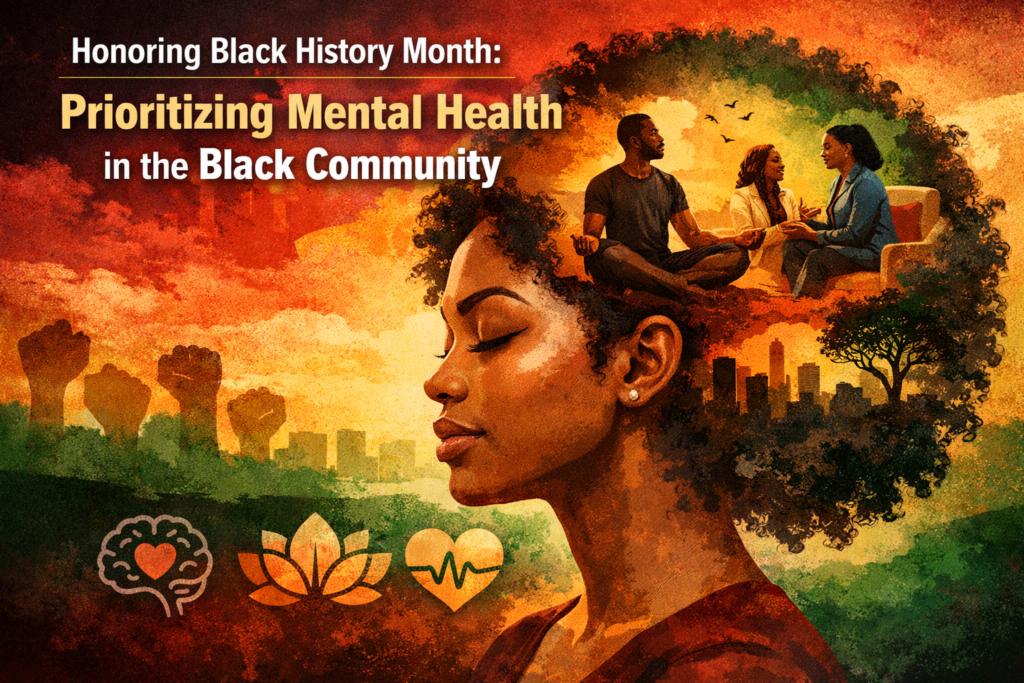
Black History Month is a time of reflection, celebration, and recognition of the resilience, brilliance, and contributions of Black individuals throughout history. It is also an opportunity to have meaningful conversations about healing, wellness, and mental health within the Black community.
At Kristle J Small Counseling Group, we recognize that mental health is not separate from history — it is deeply connected to lived experiences, generational stories, and the strength that has carried our community forward.
The Historical Context of Mental Health in the Black Community
For generations, Black individuals and families have navigated systemic racism, discrimination, economic inequities, and community trauma. These experiences can have lasting psychological effects, including:
- Chronic stress
- Anxiety and depression
- Intergenerational trauma
- Grief related to racial violence
- Burnout and emotional fatigue
Historically, mental health was not always openly discussed in Black households. Messages like “pray about it,” “be strong,” or “what happens in this house stays in this house” often replaced conversations about therapy or emotional vulnerability. While faith, resilience, and family support are powerful strengths, they do not replace professional mental health care when it is needed.
Breaking the Stigma
One of the greatest barriers to mental health care in the Black community has been stigma. Seeking therapy has sometimes been viewed as weakness rather than strength.
The truth is:
Therapy is an act of courage.
Healing is generational work.
Seeking support is strength.
Today, more Black clinicians, advocates, and community leaders are working to normalize therapy, promote culturally competent care, and create safe spaces for healing. Representation matters. Feeling seen, heard, and understood in therapy makes a meaningful difference.
Unique Mental Health Challenges
While mental health concerns are universal, Black individuals may experience additional stressors, including:
- Racial trauma and microaggressions
- Workplace discrimination
- Code-switching fatigue
- Caregiver stress within extended family systems
- Pressure to “overperform”
- Limited access to culturally responsive providers
Acknowledging these realities is not about focusing on struggle — it is about validating lived experiences and creating space for authentic healing.
Strength, Resilience, and Community
Black culture is rooted in resilience, creativity, faith, connection, and community. These are protective factors that support mental wellness. Celebrating Black joy is just as important as acknowledging hardship.
Mental health care can include:
- Therapy and counseling
- Support groups
- Music and creative expression
- Faith-based support
- Mindfulness and self-care practices
- Open conversations within families
Healing does not mean erasing history. It means honoring it while choosing wellness for the future.
A Call to Action This Black History Month
This month, we encourage you to:
- Check in on your emotional well-being
- Have honest conversations about mental health with loved ones
- Support Black mental health professionals
- Explore therapy if you have been considering it
- Prioritize rest and boundaries
Choosing healing is a powerful legacy to leave for the next generation.
Our Commitment
At Kristle J Small Counseling Group, we are committed to providing compassionate, culturally responsive care that honors the experiences of the Black community. We believe that healing happens in safe spaces — spaces where stories are respected, identities are affirmed, and growth is supported.
This Black History Month, let us celebrate not only the past, but also the ongoing journey toward emotional wellness, empowerment, and collective healing.
If you are ready to begin your healing journey, we are here to support you.
www.KristleJSmall.com
support@kristlejsmall.com
267-918-1228
Therapy for People of Color | Kristle J. Small Counseling Group
Finding a therapist who truly understands your lived experience as a person of color can feel overwhelming. Many Black and Brown adults—especially professionals—struggle to find mental health care that acknowledges cultural identity, racial stress, and generational expectations.
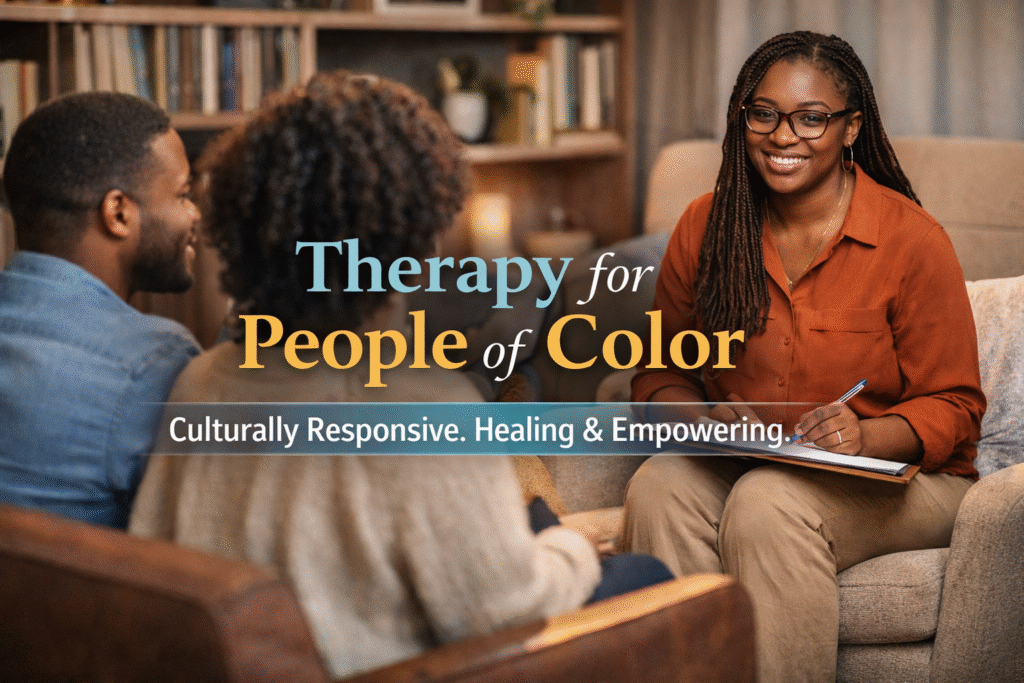
At Kristle J. Small Counseling Group, we provide culturally responsive therapy for people of color, offering a safe, affirming space to heal, grow, and thrive—without having to explain or minimize your experiences.
Why Therapy for People of Color Is Essential
People of color often face unique mental health challenges, including:
- Racial trauma and microaggressions
- Workplace stress and code-switching
- Generational and family pressure
- Being the “strong one” for everyone else
- Burnout, anxiety, and depression that go unseen
Traditional mental health settings may overlook how race, culture, and systemic stress impact emotional well-being. Culturally responsive therapy recognizes these realities and centers your identity as part of the healing process.
You Don’t Have to Be in Crisis to Start Therapy
Many people delay therapy because they believe they need to be “at rock bottom.” In reality, therapy can support you when you are:
- Feeling emotionally overwhelmed
- Struggling with anxiety or depression
- Navigating career stress or life transitions
- Wanting healthier relationships and boundaries
- Seeking personal growth and clarity
Therapy is not about weakness—it’s about self-care, emotional resilience, and sustainability.
Culturally Responsive Therapy at Kristle J. Small Counseling Group
Kristle J. Small Counseling Group is a private mental health practice created specifically for people of color, serving adults ages 21–65.
Our approach is:
- Culturally responsive – honoring identity, race, and lived experience
- Trauma-informed – addressing the impact of past and present stressors
- Collaborative – empowering clients as partners in their healing
- Judgment-free – providing a space where you can show up fully
We specialize in supporting professionals, caregivers, and individuals who are often expected to “hold it all together.”
How Therapy Can Support Your Healing
Through therapy, you can:
- Reduce anxiety and emotional exhaustion
- Heal from trauma and chronic stress
- Improve communication and relationships
- Reclaim your identity beyond productivity
- Break unhealthy generational patterns
- Build a life aligned with your values
Healing is not about becoming someone else—it’s about returning to who you truly are.
Ready to Begin Therapy?
Choosing therapy is a powerful step toward emotional wellness. At Kristle J. Small Counseling Group, we are honored to walk alongside people of color on their healing journey.
Schedule a consultation today to begin culturally responsive therapy in a space designed with you in mind.
Learn More
Juneteenth and Mental Health In The Black Community
Given the physical and psychological trauma that we have been through in the Black Community, our mental health has been heavily impacted. As a community, we have experienced many years of slavery, racism, and biases.
It is evident in the depression, anxiety, and psychological trauma that has plagued our people since our arrival to this country in bondage. Given this history of trauma, it is important that we acknowledge the impact of Our Story on our mental health and the need for counseling and therapy in our community. We must break the stigma of mental health in the Black Community in order to embrace freedom, experience a more expansive freedom and heal from the pain of our collective past.
Mental health is a key component of our physical and emotional wellbeing, general happiness, and quality of life. Therefore the conversation of Black Mental Health, counseling, and therapy should be discussed in our homes, at our dinner tables, and weaved throughout the fabric of our lives. Juneteenth is a federal holiday and now with official state sanction, we can publicly and proudly continue to celebrate our outer freedom, however, how are we recognizing our ongoing need for mental and emotional freedom and healing? What things can we do to achieve a sense of this inner freedom, discuss our psychological trauma, and heal from the generational trauma that we have experienced throughout the years?
Moving forward I propose the idea of incorporating Black Mental Health Awareness into the Juneteenth holiday, a holiday in which we can begin to collectively discuss, address, and celebrate mental and emotional healing in the Black Community. I also propose that in our holiday observances we begin to normalize discussions of Black Mental Health and the role of counseling and therapy in the Black Community. In doing so Juneteenth and our cultural holidays can become times in which we are consciously purposefully and deliberately dedicated and committed to achieving our mental and emotional healing.
Learn More